


Augmented reality in online shopping
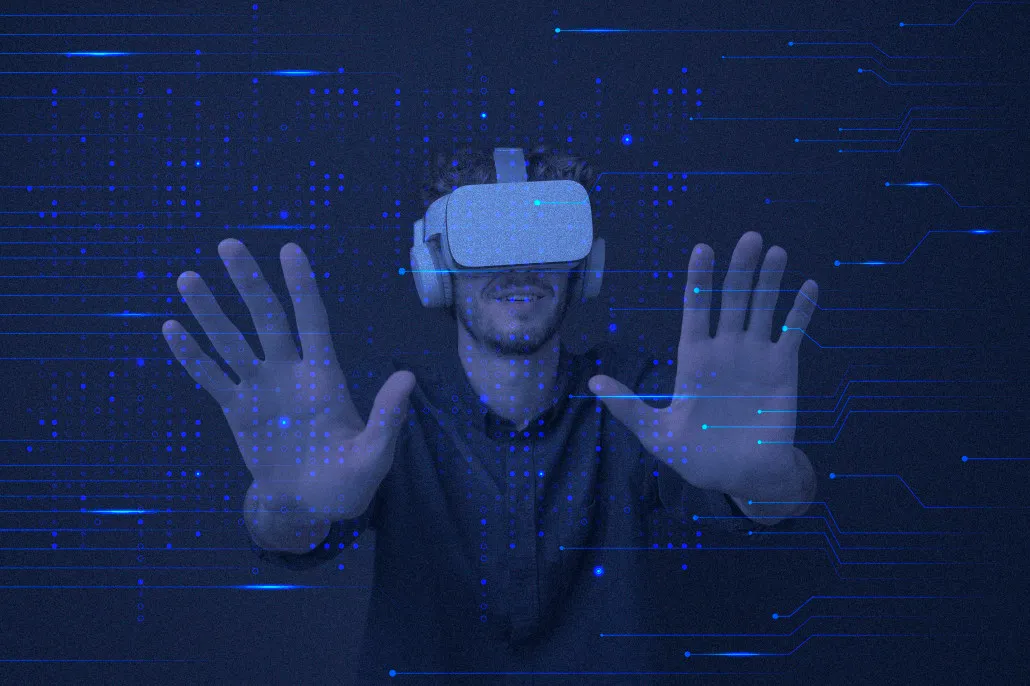
Augmented reality has come a long way from concept to real-world application. Until recently, the costs of implementing this innovative technology were so high that companies could only imagine and weigh up the applications they might implement.
Today, this has changed, as augmented reality is built into most technological devices in education, entertainment, leisure, travel and more.
But what is augmented reality? In this article we explain the concept, the benefits of implementing it and how it is applied in different business strategies.
What is augmented reality?
Augmented reality lets us view virtual information overlaid on the real world using technological devices to create experiences that provide knowledge, entertainment and interactivity in real time. In other words, it places virtual objects in the physical world for users to see, revolutionising the way we carry out business processes.
But what characterises augmented reality? We can say that all augmented reality technology combines the real world with the virtual one, offers real-time interaction interfaces, adapts to multiple environments and makes interaction easier in three dimensions.
So, are augmented reality and virtual reality the same thing? The two concepts often go hand in hand, but they are not the same.
The main difference between augmented and virtual reality is that VR builds the world we immerse ourselves in, whereas in AR it is our own world that becomes the backdrop for placing objects and images in a real environment.
There is also a technology that combines the two, known as mixed reality. Mixed reality lets us see objects in our world and build a physical experience indistinguishable from the real thing.
What benefits and drawbacks does augmented reality bring to companies?
Benefits:
1. It is a technology that can be applied in different fields
2. It makes training easier by offering far more versatile and eye-catching learning
3. It offers large amounts of information
4. It lets us speed up tasks and processes
5. It gives us the chance to run unique, highly effective marketing campaigns
6. It boosts the sales of businesses and shops
7. It broadens customers’ knowledge of companies’ products and services
8. It increases the number of actions users and consumers take
9. It lets us offer unique experiences that will help us stand out from our competitors
Drawbacks:
1. It requires dedication, effort and time to collect the virtual information
2. Having experts is essential
3. Without a good grasp of the tool, the information it provides may be of little use
4. We need fast devices with high processing power
5. Implementing this technology is generally expensive
The new reality of online marketing
In marketing, it has been found that, if we use the elements of augmented reality correctly, we can bring great added value to our users and consumers. As we know, establishing direct contact with potential customers and keeping them loyal is difficult, as it calls for innovative strategies.
One of the reasons companies have started to consider commercial strategies built on this technology is the flood of advertising that fills our daily lives and the wide variety of offers we find in both physical and virtual shops.
Faced with this situation and the exponential growth in competition, we must offer innovative formats that capture our consumers’ attention, using augmented reality systems applied to different fields and business processes.
The sectors where the use of augmented reality is expected to grow most are the healthcare, property, retail, education and telecommunications sectors, live events and video games.
Augmented reality in online shops
Competition keeps growing, and our competitors offer an ever better user experience, so we must step up our commercial strategies and find new ways to innovate, meeting our consumers’ demand while setting ourselves apart from the competition.
Augmented reality can help us reinvent online shopping and boost sales by implementing this technology as an integral part of different marketing strategies.
Examples of augmented reality applications in online shops:
Virtual fitting rooms
Many online shops that sell clothes and accessories have introduced virtual fitting rooms, which let consumers see on their mobile devices how they would look in a garment or accessory without having it physically to hand.
Interactive user manuals
Interactive manuals are a considerable step forward, making instructions easier to understand through interactive walkthroughs. In the future, they are expected to replace printed manuals entirely.
Home decoration
IKEA first introduced this application in 2013: it lets customers virtually place the furniture they are interested in buying to see how it looks in their homes before they purchase it.
The future of augmented reality
Augmented reality can be considered one of the marketing trends that will be used most in the coming years, according to a study carried out by the company TechNavio.
We can therefore say with confidence that this technology has a great future ahead of it and that it will ultimately become an essential tool for any company that wants to offer the best possible customer experience.
by Catalunya Mobile
Share this post


